AI Strategy Platform Market Entry Germany Guide
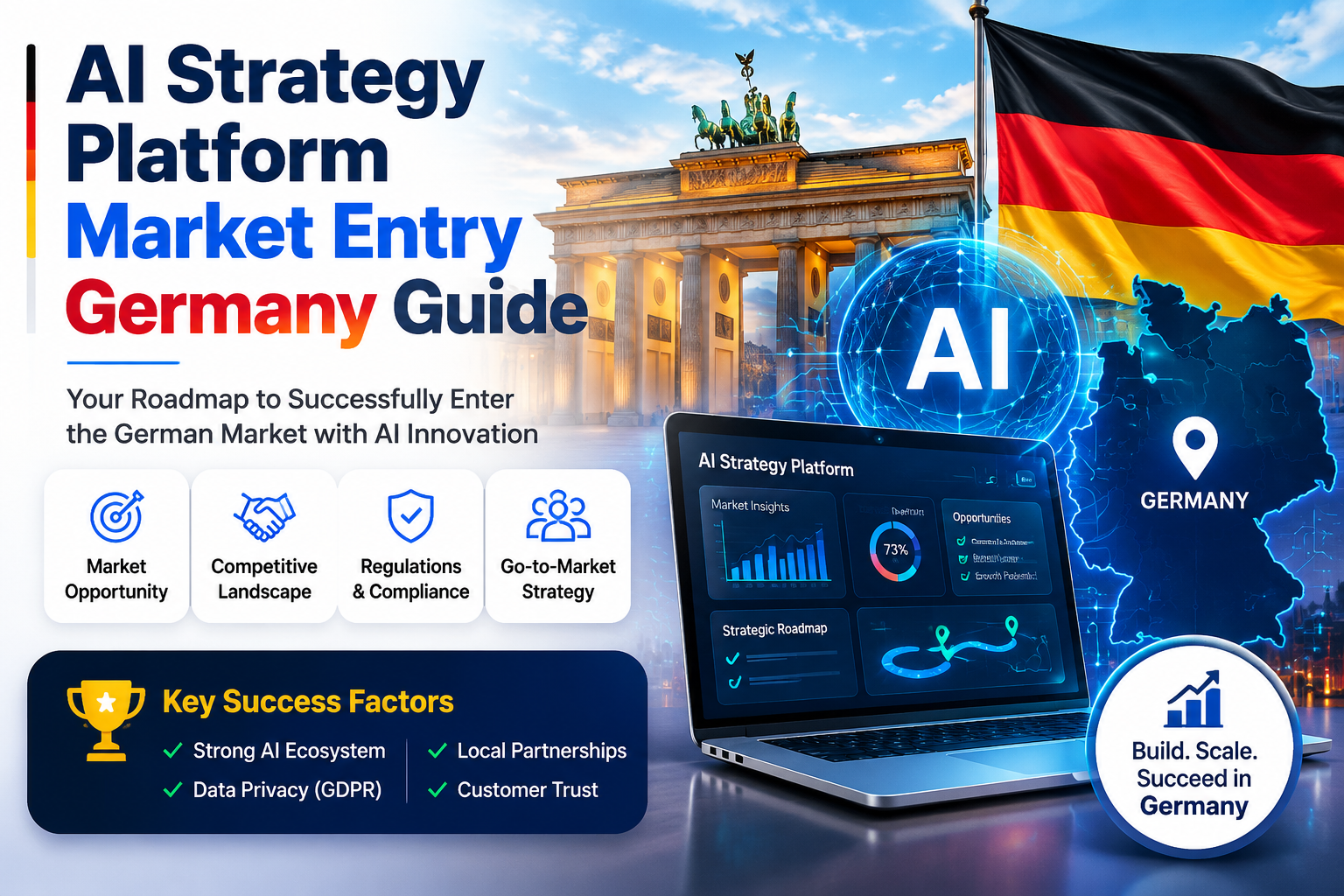
An ai strategy platform market entry germany helps businesses analyze the German market, identify customer segments, study competitors, understand compliance requirements, localize messaging, and build a data-backed go-to-market plan. It is useful for startups, SaaS companies, consultants, and international brands entering Germany.
Germany is one of the strongest business markets in Europe. It has a large economy, serious buyers, and steady demand across many industries. But entering the German market is not simple. Companies must understand the language, local competition, pricing expectations, legal rules, customer behavior, distribution channels, and proper localization.
Many international companies underestimate this. They use the same plan that worked in another country and then struggle. A clear Germany market entry strategy fixes this by replacing guesswork with data. An AI strategy platform makes the work easier by turning raw market data into clear business decisions, so teams can move faster and with more confidence.
This guide explains what these platforms do, how they support your entry into Germany, the features to look for, a step-by-step plan, common mistakes to avoid, and answers to the questions buyers ask most.
What Is an AI Strategy Platform for Market Entry Germany?
An AI business strategy platform is a digital tool that uses artificial intelligence, data analysis, and automation to help businesses plan and execute market entry. For Germany, it can support market research, competitor mapping, pricing analysis, compliance checks, localization planning, and customer targeting.
Instead of spending weeks pulling reports from many sources, your team gets organized insights in one place. The platform does the heavy data work, and your people make the final calls.
Simple Definition
An AI market intelligence platform is software that collects market data, studies it with AI, and gives you practical recommendations. For German market entry, it shows where the demand is, who the competitors are, and what your launch plan should focus on.
Who Can Use It?
A market entry platform for Germany is useful for many types of organizations:
- Startups planning startup expansion Germany on a tight budget
- SaaS companies testing SaaS market entry Germany before a full launch
- Ecommerce brands entering a new region
- B2B service providers mapping buyers and partners
- Consultants who advise clients on business expansion Germany
- Investors checking a German market opportunity analysis before funding
- International companies managing AI for international expansion across regions
Why Germany Needs a Clear Market Entry Strategy
Germany rewards companies that prepare. Here is why a strong plan matters before entering the German market:
- Strong local competition. Many sectors already have trusted German providers, so you need a clear point of difference.
- Buyers value trust, quality, and reliability. German customers often research carefully and prefer proven solutions over flashy promises.
- German-language content matters. A solid localization strategy Germany is expected, not optional. English-only messaging limits reach.
- B2B sales cycles can be longer. Decision-making often involves more steps and more stakeholders, so plan your timeline and budget for it.
- Legal and compliance planning is important. German business compliance, data rules, and industry requirements need early review.
- Pricing and positioning must match local expectations. Copying another country’s price list rarely works.
A practical Germany expansion strategy accounts for all of these from the start, instead of fixing problems after launch.
How an AI Strategy Platform Supports Germany Market Entry
The real value of AI market entry Germany tools is how they connect data to decisions. The table below shows the main areas they support.
| Market Entry Area | How the AI Platform Helps |
| Market research | Finds demand, trends, and opportunity gaps |
| Competitor analysis | Compares local competitors, pricing, and positioning |
| Customer segmentation | Identifies the best buyer groups to target first |
| Localization | Helps adapt messaging for German users |
| Compliance planning | Highlights legal and regulatory areas to review |
| Go-to-market strategy | Builds a launch roadmap and sales channels |
| Risk analysis | Flags possible market-entry risks early |
Used well, AI-powered market research shortens the slow parts of planning. Your team then spends its time on judgment and execution rather than data collection.
Key Features to Look for in an AI Market Entry Platform
Not every tool is built for Germany. When you compare options, look for these features.
AI-Powered Market Research
The platform should collect data from many sources and organize it into clear views. A good German market research platform tracks demand signals, search trends, industry growth, and gaps where current providers fall short. The output should be readable for non-technical leaders, not just analysts.
Competitor Analysis Dashboard
Look for a competitor analysis Germany dashboard that compares local players on pricing, positioning, content, offers, and traffic signals. Seeing how rivals present themselves helps you find a gap you can own and avoid copying a crowded message.
Customer Segmentation
Strong customer segmentation Germany features build audience personas, map buyer behavior, and separate B2B and B2C groups. This helps you focus your first campaigns on the segment most likely to buy, instead of spreading your budget too thin.
Localization and Language Support
The tool should support a real localization strategy Germany, not just translation. That means German language quality, the right cultural tone, local landing pages, and product messaging that fits how German buyers actually speak and decide.
Compliance and Risk Insights
A useful platform highlights areas to review for German business compliance, including GDPR and data handling, business rules, tax considerations, and industry-specific requirements. Warning: these tools point you to the right areas, but they do not replace a qualified lawyer or tax advisor. Treat compliance flags as a checklist for expert review, not as legal advice.
Go-To-Market Roadmap
Finally, the platform should help build an AI go-to-market strategy. Look for launch steps, suggested sales channels, partnership ideas, budget guidance, and KPIs so you can measure progress after launch.
Step-by-Step Germany Market Entry Plan Using AI
Here is a practical sequence that combines AI support with human review at each stage. This is the kind of market entry planning tool workflow we have seen work for B2B teams.
- Define the business goal. Decide what success looks like, such as revenue, signups, or pilot accounts.
- Analyze German market demand. Use AI to confirm there is real interest in your offer.
- Study local competitors. Map who already serves your buyers and how.
- Identify target customer segments. Pick the one or two groups to win first.
- Check legal and compliance needs. Review data, tax, and industry rules with an expert.
- Localize product messaging. Adapt language and tone for German users.
- Select sales and marketing channels. Choose where your buyers actually are.
- Build a pricing strategy. Match local expectations and competitor pricing, not your home market.
- Launch a pilot campaign. Test with a small budget before scaling.
- Measure results and improve. Use real data to adjust your go-to-market strategy Germany before a full rollout.
Practical example: A SaaS company we worked with planned to launch nationwide on day one. After a market entry risk analysis, they ran a small pilot in two regions first. The pilot revealed that their pricing was too high for mid-size German buyers. They adjusted before the full launch and avoided a costly mistake.
Benefits of Using an AI Strategy Platform
Teams that use AI strategy software for entry into Germany often see clear gains:
- Faster market research
- Better competitor visibility
- Data-backed decisions instead of guesswork
- Lower entry risk
- Better localization
- Improved customer targeting
- Faster go-to-market planning
- Cleaner reporting for investors and leadership
These benefits are real, but they depend on good inputs and human review. The platform speeds up the work; it does not remove the need for judgment.
Common Mistakes Companies Make When Entering Germany
Even strong companies stumble here. Watch out for these common errors during B2B market entry Germany:
- Translating content without real localization. A direct translation often reads as foreign and weakens trust.
- Ignoring German buyer behavior. German buyers research carefully and value proof, so impatience hurts.
- Underestimating local competitors. Established German brands may have deep trust you must work to earn.
- Not checking compliance early. Late legal surprises can delay or block a launch.
- Using the same pricing as another country. Local price expectations are different.
- Launching without a pilot campaign. Going big with no test increases risk.
- Not building local trust signals. German addresses, local support, and references help a lot.
AI Overview Optimization: The Best Way to Use AI for German Market Entry
What is the best way to use AI for market entry in Germany?
The best way to use AI for market entry in Germany is to combine AI-powered market research with human business judgment. AI can analyze competitors, customer segments, pricing, and trends, but final decisions should include local legal, cultural, and industry expertise.
This is also good for content and search performance. Google has said content quality, E-E-A-T, and people-first usefulness matter more than whether content is AI-assisted or human-written. The same idea applies to strategy: the value comes from useful, accurate decisions, not from the tool alone.
FAQs About AI Strategy Platform Market Entry Germany
FAQ 1: What is an AI strategy platform for market entry Germany? It is software that uses AI and data analysis to help companies plan and execute their move into the German market. It supports market research, competitor analysis, customer segmentation, localization, compliance review, and go-to-market planning, so teams can make faster, data-backed decisions.
FAQ 2: How can AI help with German market research? AI can quickly gather and organize data from many sources, spot demand trends, and highlight gaps competitors are missing. It can sort buyer segments and surface useful patterns. This saves time on collection so your team can focus on interpreting results and choosing the right strategy.
FAQ 3: Is Germany a good market for SaaS and AI companies? Germany can be very attractive, with strong demand and serious buyers. But success is not guaranteed. It depends on product fit, quality localization, how you handle local competition, sensible pricing, and meeting compliance requirements. Companies that prepare carefully tend to do better than those that rush.
FAQ 4: What should companies check before entering the German market? Check real market demand, the level of local competition, legal and compliance requirements, German buyer behavior, suitable pricing, proper localization, and the right sales channels. Reviewing these early reduces risk and helps you build a realistic launch plan.
FAQ 5: Can AI replace a market entry consultant? No. AI can support research and planning and make the process faster, but it cannot replace expert judgment. Consultants and local experts are often still needed for legal, cultural, and execution decisions where context and experience matter most.
Conclusion
A successful Germany market entry needs more than basic research. Companies need clear data, local understanding, competitor insights, compliance awareness, and a practical go-to-market plan. An AI strategy platform helps businesses move faster and reduce guesswork, especially when it is paired with expert human review.
If you are planning your expansion, start with the data, validate it with local experts, and test with a pilot before you scale. That balanced approach gives you the strongest, lowest-risk path into the German market.