Which ai businesses have defensible moats network effects data flywheel

Every week, founders launch new AI products for writing, coding, design, support, and marketing. Most of them are built on the same handful of foundation models from OpenAI, Anthropic, Google, and Meta. That raises the question that actually decides who survives: which AI businesses have defensible moats?
A moat is not a feature. It is the thing that stops a well-funded competitor from copying you next quarter. In AI specifically, the most durable moats come from three forces working together: network effects, proprietary data, and data flywheels. Below I break down what each one means, which AI business models hold them, and, just as important, which ones look strong but aren’t.
This is the same lens venture investors use when they decide whether an AI company is a real business or a thin wrapper that will be commoditized within a year.
What “Economic Moat” Actually Means
The term economic moat was popularized by Warren Buffett to describe a sustainable competitive advantage that protects a company’s profits over time. Strategist Hamilton Helmer later formalized seven such advantages (scale economies, network economies, switching costs, branding, cornered resources, counter-positioning, and process power) in his book 7 Powers.
Classic moats include:
- Strong brands (Coca-Cola, Apple)
- High switching costs (Salesforce, SAP)
- Network effects (Visa, LinkedIn)
- Proprietary technology or data (Google, Bloomberg)
- Distribution advantages (Microsoft bundling)
In software, and AI in particular, the most reliable moats almost always trace back to data and user behavior, things competitors cannot simply buy or prompt their way into.
Why Most AI Startups Have Weak Moats
Here is the uncomfortable truth most founders avoid: if your product is “ChatGPT, but for X,” you probably don’t have a moat yet.
When the underlying model is rented from a third party, anyone else can rent the same model. That pushes companies to compete on price, features, and marketing spend, the three things that erode margins fastest. A genuinely defensible AI business needs something the model provider doesn’t have and a rival can’t replicate quickly.
That “something” is usually a network, a dataset, or a flywheel. Let’s define each before looking at real examples.
Understanding Network Effects in AI
A network effect exists when a product gets more valuable as more people use it. The first fax machine was useless; the millionth was essential.
Real examples that AI companies aim to emulate:
- LinkedIn every new professional makes the network more useful for recruiters and members alike.
- Marketplaces (Uber, Airbnb) more supply attracts more demand, which attracts more supply.
- OpenAI’s developer ecosystem more developers building on the platform means more plugins, integrations, and reasons to stay.
For AI builders, the goal is to design products where each new user contributes something, data, content, connections, or feedback, that improves the experience for everyone else. If you’re building in the hiring space, this dynamic is central to how AI is changing hiring and recruiting, where each completed hire teaches the system to match better.
Understanding the Data Flywheel
The data flywheel is the single most important moat concept in AI. The loop looks like this:
- Users use the product.
- Their usage generates proprietary data.
- That data improves the AI model.
- A better model attracts more users.
- More users generate even more data.
Once this loop is spinning, every month of operation widens the gap between you and a new entrant. Some of the clearest real-world flywheels:
- Google Search every query and click teaches the ranking system, and no startup can match decades of accumulated search behavior.
- Tesla millions of cars on the road feed real driving data back into its self-driving models.
- Waze every driver improves the traffic map in real time for every other driver.
The key test: does your product measurably improve from usage in a way competitors cannot copy? If yes, you may have a flywheel. If your product is identical on day 1,000 as on day 1, you don’t.
10 AI Business Models With Strong Moats
Below are categories where network effects and data flywheels tend to compound. For each, I’ve noted why the moat forms, that “why” is what you should stress-test in your own business.
1. AI Recruitment Platforms
Hiring outcomes, skills data, and interview signals accumulate into a matching dataset that gets sharper over time. This is a textbook data flywheel, and a fast-growing space, as covered in our guide on how AI is changing hiring and recruiting.
2. AI Customer Support Platforms
Every resolved ticket teaches the system new questions, edge cases, and fixes. Companies like Intercom and Zendesk turn aggregated support data into a moat rivals can’t shortcut.
3. AI Sales Intelligence Platforms
Deal outcomes, objection handling, and email/call engagement create proprietary signals. This is why investors fund AI sales tools heavily, the data compounds.
4. AI Healthcare Platforms
Clinical notes, diagnostic outcomes, and patient histories are extremely hard to obtain and tightly regulated. Epic Systems’ dominance in electronic health records is a moat built on data access and switching costs, not features.
5. AI Financial Intelligence Platforms
Bloomberg is the canonical example: proprietary financial data plus a workflow professionals can’t abandon. AI fraud-detection and risk systems improve with every transaction processed.
6. AI Vertical SaaS
Software built for one industry (legal, real estate, construction, insurance) accumulates niche datasets a general-purpose tool can’t access. A focused product like an AI voice recorder business can build a moat by specializing in one vertical’s vocabulary and workflows.
7. AI Knowledge Management Platforms
The more a company’s documents, meetings, and processes live inside your tool, the harder it is to leave. Glean and Notion AI grow stickier the longer they’re used.
8. AI Marketplaces
Two-sided platforms enjoy classic network effects: more buyers attract more sellers and vice versa. AI service and talent marketplaces fit this model.
9. AI Workflow Automation Platforms
Once automations are wired into daily operations, switching costs spike. If you’re exploring this category, see our roundup of the best AI workflow automation tools.
10. AI Community & Ecosystem Platforms
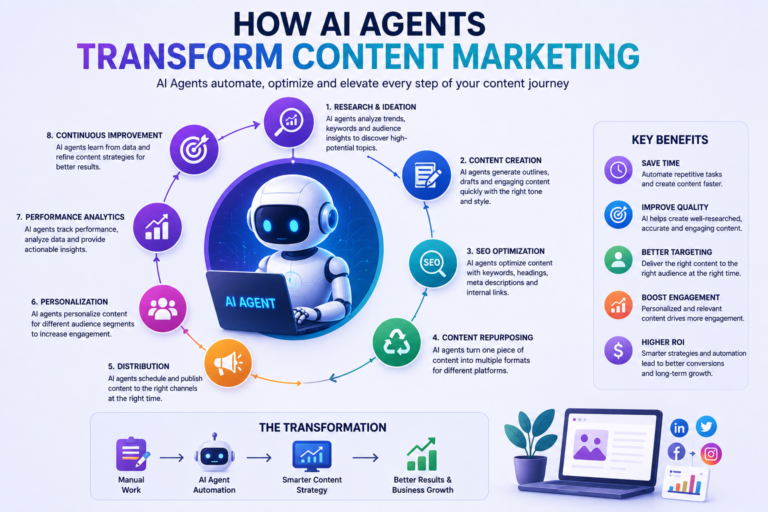
Users, relationships, and shared content create defensibility that software alone can’t. This is also why ecosystems matter more than models long-term, a theme we explore in how AI agents transform content marketing.
Characteristics of a Strong AI Moat
When I evaluate whether an AI company is defensible, I look for these signals:
- Proprietary data competitors cannot buy or scrape.
- Continuous learning the product improves automatically with usage.
- High switching costs leaving is painful, slow, or expensive.
- Network effects value rises with adoption.
- Workflow integration the product is embedded in daily operations.
- Brand trust users believe the output, especially in high-stakes fields.
The strongest companies stack several of these at once.
AI Businesses That Look Defensible But Aren’t
Be honest about these models, they can still be profitable, but the moat is thin:
- Generic AI writers most run on the same base models.
- Basic AI image generators features are quickly cloned.
- Simple chatbots without unique data, there’s little to defend.
- Generic productivity wrappers competition floods in fast.
If you’re in one of these categories, your moat has to come from distribution, brand, or a data loop you build on top of the model, not the model itself.
A Simple Framework for Founders
Before building, pressure-test your idea with these questions:
- What unique data will we collect that no one else has?
- Does the product get measurably better with usage?
- Are there network effects, does each user help the next?
- What happens to our advantage at 1 million users?
- Will customers grow more dependent on us over time?
If you can’t answer at least two of these convincingly, you have a feature, not a company.
The Future of AI Competitive Advantage
As foundation models become cheaper and more interchangeable, the model itself will stop being the differentiator. Durable advantage will shift toward proprietary data, distribution, customer relationships, brand trust, and network effects.
The winners of the next decade likely won’t have the “best” model. They’ll have the strongest data flywheels, the deepest workflow integration, and the most valuable networks.
FAQs
What is a moat in an AI business?
A moat is a sustainable competitive advantage, like proprietary data or network effects, that makes it hard for competitors to copy or replace your AI company.
What is a data flywheel?
A data flywheel is a self-reinforcing loop where users generate proprietary data, that data improves the AI model, and the better model attracts more users who generate even more data.
Which AI businesses have the strongest moats?
AI in recruitment, healthcare, finance, vertical SaaS, workflow automation, marketplaces, and customer support tends to be most defensible because each accumulates proprietary data and switching costs over time.
Are network effects important for AI startups?
Yes. Network effects make a product more valuable as adoption grows and are one of the hardest advantages for a competitor to replicate.
Why is proprietary data more valuable than the AI model?
Models are increasingly rentable and interchangeable, but unique data is not. Proprietary data lets your system improve in ways rivals using the same model cannot match.