Which Healthcare Uniforms Last the Longest?

Introduction
Healthcare professionals rely on their uniforms every day, often for long shifts in demanding environments. A durable healthcare uniform not only looks professional but also withstands frequent washing, repeated movement, and daily wear without losing its shape or comfort. Choosing long-lasting uniforms helps reduce replacement costs while ensuring consistent comfort and appearance throughout busy working days. Understanding which materials, construction methods, and design features contribute to durability allows healthcare workers to invest in uniforms that deliver reliable performance over time.
Fabric Quality Makes the Biggest Difference
The fabric used in healthcare uniforms plays the greatest role in determining their lifespan. High-quality blends, particularly those combining polyester and cotton, are widely recognised for their durability. Polyester provides strength, wrinkle resistance, and colour retention, while cotton offers softness and breathability.
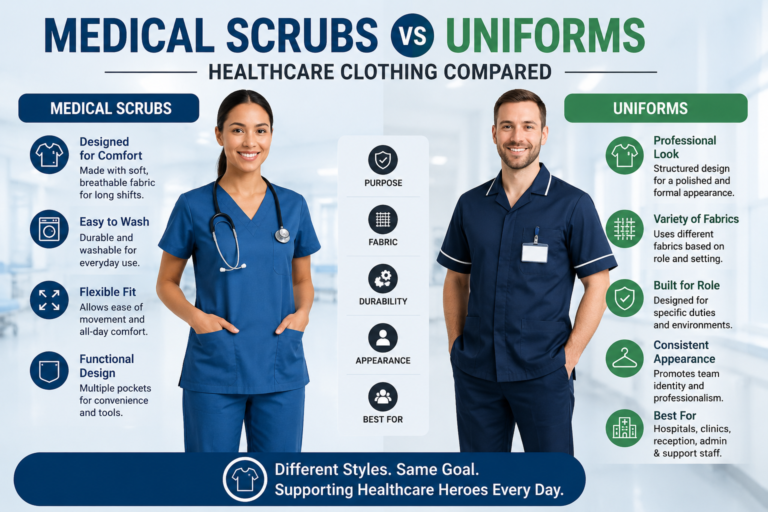
These blended fabrics maintain their structure through repeated washing and daily use. They are less likely to shrink, fade, or develop excessive wear compared with lower-quality materials, making them a practical choice for healthcare professionals. High-quality doctors and nurses scrubs provide lasting comfort, durability, and a professional appearance throughout demanding healthcare shifts.
Reinforced Stitching Improves Durability
Strong stitching is another important factor when evaluating the longevity of healthcare uniforms. Uniforms experience constant stretching and movement, particularly around the shoulders, knees, elbows, and pockets.
Well-manufactured garments use reinforced seams and high-quality thread to prevent splitting during everyday activities. Double stitching in high-stress areas helps extend the garment’s lifespan while maintaining its professional appearance even after months of regular use.
Stretch Fabrics Increase Longevity
Modern healthcare uniforms increasingly incorporate stretch materials that improve comfort while reducing fabric stress. Blends containing elastane or spandex allow greater flexibility when bending, lifting, or reaching.
Because the fabric moves naturally with the wearer, there is less strain on seams and fibres. This flexibility not only improves comfort throughout long shifts but also helps prevent premature damage caused by repeated movement.
Colour Retention Matters
Healthcare uniforms are washed frequently to maintain hygiene standards. Inferior fabrics may fade quickly after repeated laundering, making uniforms appear worn even when the fabric itself remains intact.
High-quality uniforms use colourfast dyes that resist fading through frequent washing. Maintaining vibrant colours and a professional appearance for longer reduces the need for premature replacement while helping staff present a consistently neat image.
Easy-Care Materials Last Longer
Healthcare workers often appreciate uniforms that require minimal maintenance. Easy-care fabrics resist wrinkles, dry quickly, and retain their shape without requiring special washing procedures.
Materials designed for industrial or frequent laundering generally withstand repeated cleaning better than delicate fabrics. Following the manufacturer’s care instructions further extends the garment’s lifespan while preserving both comfort and appearance.
Practical Design Features Improve Wear
Well-designed healthcare uniforms include practical features that contribute to long-term durability. Strong pockets, reinforced fastenings, quality zips, durable buttons, and well-positioned seams reduce unnecessary wear during daily use.
Uniforms designed specifically for healthcare environments often anticipate the physical demands of clinical work. Features such as side vents, flexible waistbands, and ergonomic cuts reduce stress on the garment while supporting freedom of movement.
Choosing the Right Fit
A correctly fitting uniform often lasts longer than one that is too tight or too loose. Tight garments place additional stress on seams during movement, increasing the risk of splitting or stretching. Oversized uniforms may catch on equipment or furniture, leading to unnecessary damage.
Selecting the correct size allows the fabric to move naturally while maintaining comfort throughout long working hours. Professional fitting guidance can help ensure the best balance between appearance, mobility, and durability.
Investing in Quality Saves Money
Although premium healthcare uniforms may cost more initially, they often prove more economical over time. Higher-quality fabrics, superior construction, and better durability reduce replacement frequency, making them a worthwhile long-term investment.
For professionals who wear uniforms every working day, reliable garments improve comfort, maintain a professional appearance, and provide better value compared with frequently replacing cheaper alternatives that wear out more quickly.
Conclusion
The longest-lasting healthcare uniforms combine high-quality fabric blends, reinforced stitching, stretch materials, colour retention, practical design features, and proper fit. Investing in well-made uniforms not only improves comfort during demanding shifts but also reduces replacement costs and maintains a professional appearance over extended periods. By carefully considering fabric quality, construction, maintenance requirements, and overall design, healthcare professionals can choose uniforms that continue performing reliably through countless working days while providing lasting comfort and durability.