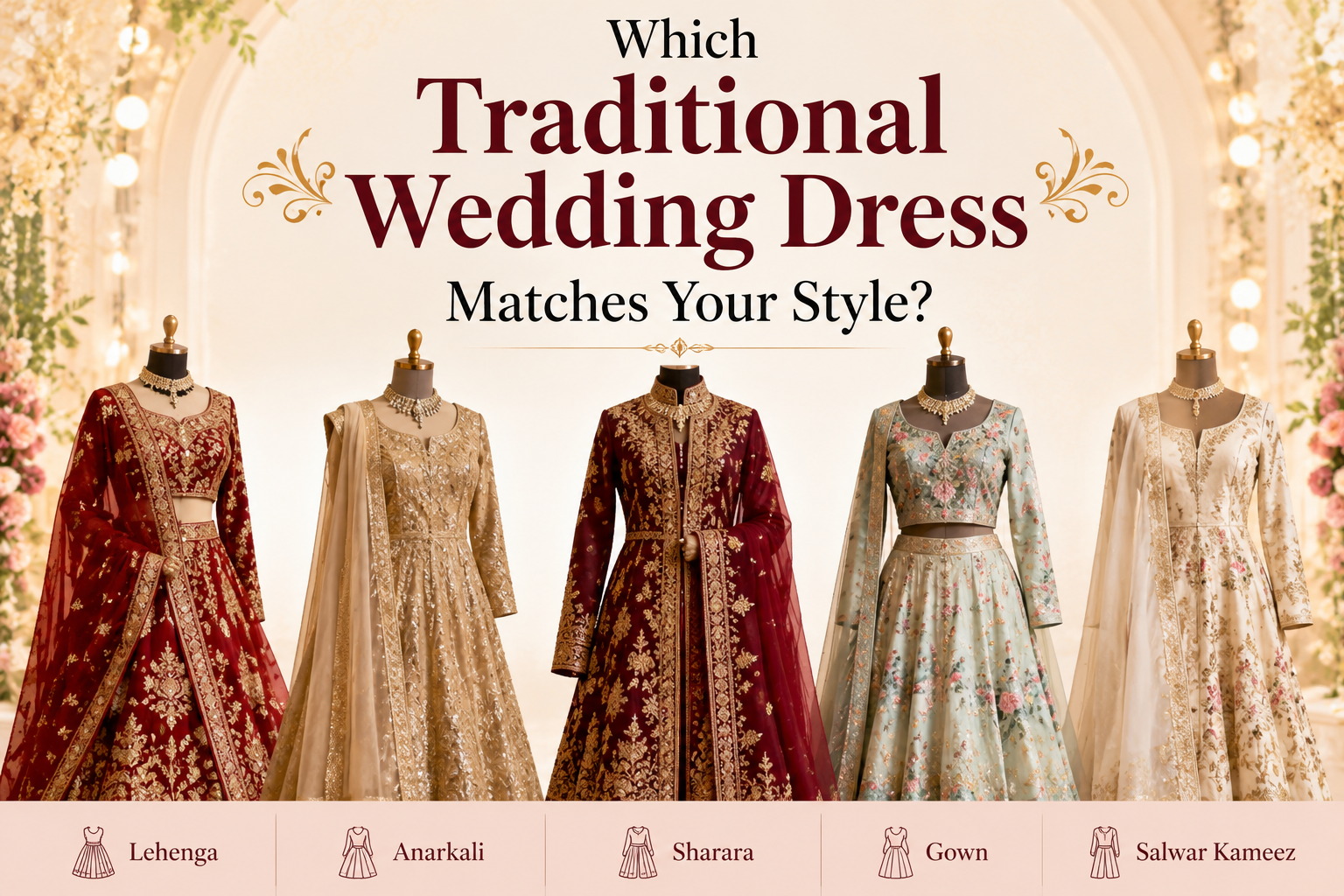
Which Traditional Wedding Dress Matches Your Style?
Introduction
Choosing a traditional wedding dress is one of the most exciting parts of wedding planning. Every bride has a unique personality, cultural background, and sense of style, and the perfect dress should reflect all three. Traditional wedding attire comes in many beautiful forms, from richly embroidered South Asian wedding dresses to elegant Middle Eastern gowns and timeless Western-inspired classics. Rather than following trends alone, selecting a dress that complements your personal style ensures you feel confident and comfortable throughout your special day. Understanding different traditional designs, colours, fabrics, and silhouettes makes it easier to find a wedding dress that truly represents who you are.
Understand Your Personal Style
Before exploring different wedding dresses, take some time to identify your personal fashion preferences. Some brides naturally prefer classic elegance, while others enjoy bold colours, detailed embroidery, or modern interpretations of traditional designs.
Think about the clothing you normally enjoy wearing. If you appreciate minimal designs, you may prefer simpler traditional outfits with refined detailing. If you enjoy statement fashion, heavily embellished dresses with intricate craftsmanship may suit your personality better. Your wedding dress should feel like an enhanced version of your everyday style rather than something completely unfamiliar.
Choose a Silhouette That Complements You
The cut and silhouette of your wedding dress significantly influence both appearance and comfort. Traditional wedding attire offers many flattering options, including flowing gowns, lehengas, sarees, Anarkalis, A-line dresses, straight-cut designs, and fitted styles.
Rather than following current fashion trends, choose a silhouette that complements your body shape while allowing you to move comfortably throughout the ceremony and celebrations. A well-fitted dress not only enhances your appearance but also helps you remain relaxed during long wedding events.
Consider Traditional Colours Carefully
Traditional wedding colours vary greatly between cultures and personal preferences. Rich shades such as red, maroon, gold, emerald green, royal blue, ivory, champagne, and pastel tones all carry different meanings and visual appeal.
While vibrant colours remain popular for many traditional ceremonies, modern brides increasingly combine classic shades with softer contemporary palettes. Selecting colours that complement your skin tone and wedding theme creates a balanced appearance while maintaining cultural significance where appropriate.
Pay Attention to Fabric Quality
The fabric influences both the appearance and comfort of your wedding dress. Luxurious materials such as silk, chiffon, velvet, satin, organza, georgette, and net each create distinctive effects suitable for different seasons and wedding settings.
Lighter fabrics often suit summer weddings, while heavier materials provide warmth and structure during cooler months. High-quality fabrics also drape more naturally, photograph beautifully, and remain comfortable throughout lengthy celebrations.
Balance Embroidery and Simplicity
Traditional wedding dresses frequently feature detailed embroidery, beadwork, sequins, threadwork, crystals, pearls, or hand-crafted embellishments. Although elaborate decoration creates stunning visual impact, it should remain balanced with the overall design.
Brides who appreciate understated elegance may prefer delicate embroidery concentrated around selected areas, while those seeking a dramatic appearance may enjoy richly decorated garments featuring detailed craftsmanship throughout the dress. Finding the right balance ensures the outfit reflects your personality without appearing overwhelming.
Match the Dress With Your Wedding Theme
Your wedding dress should harmonise with the style of your ceremony and reception. Grand ballroom celebrations often suit highly embellished traditional gowns, while smaller intimate weddings may benefit from lighter, more refined designs.
Outdoor ceremonies, destination weddings, and cultural events may also influence your choice of fabric, colour, and decoration. Coordinating your dress with the overall wedding theme creates visual consistency while enhancing photographs and the overall atmosphere.
Select Accessories That Complete the Look
Accessories enhance your traditional wedding outfit without distracting from it. Carefully chosen jewellery, footwear, handbags, veils, dupattas, headpieces, and hair accessories help create a complete bridal appearance.
Rather than selecting every available accessory, focus on pieces that complement the dress’s colours and embroidery. Comfortable footwear also deserves attention because brides often spend many hours standing, walking, and dancing throughout the celebrations.
Prioritise Comfort Alongside Beauty
Even the most beautiful wedding dress loses its appeal if it becomes uncomfortable after only a short period. Brides should consider the weight of the outfit, ease of movement, breathability, and overall practicality before making a final decision.
Try sitting, walking, and raising your arms during fittings to ensure the dress remains comfortable in different positions. Alterations performed by experienced professionals help achieve the ideal fit while maintaining the beauty of the original design.
Conclusion
Choosing the right traditional wedding dress involves much more than selecting an attractive design. By understanding your personal style, choosing a flattering silhouette, selecting appropriate colours and fabrics, balancing embellishments, matching the wedding theme, coordinating accessories, and prioritising comfort, you can find a dress that truly reflects your personality. A thoughtfully selected traditional wedding dress allows you to honour cultural traditions while expressing your individual style with confidence. When beauty, comfort, and personal preference come together, your wedding outfit becomes a memorable part of one of the most important days of your life.